The Montessori Method vs. Traditional Education: What We Can Learn from Both
Lena Grant
2025-11-27
6 min read
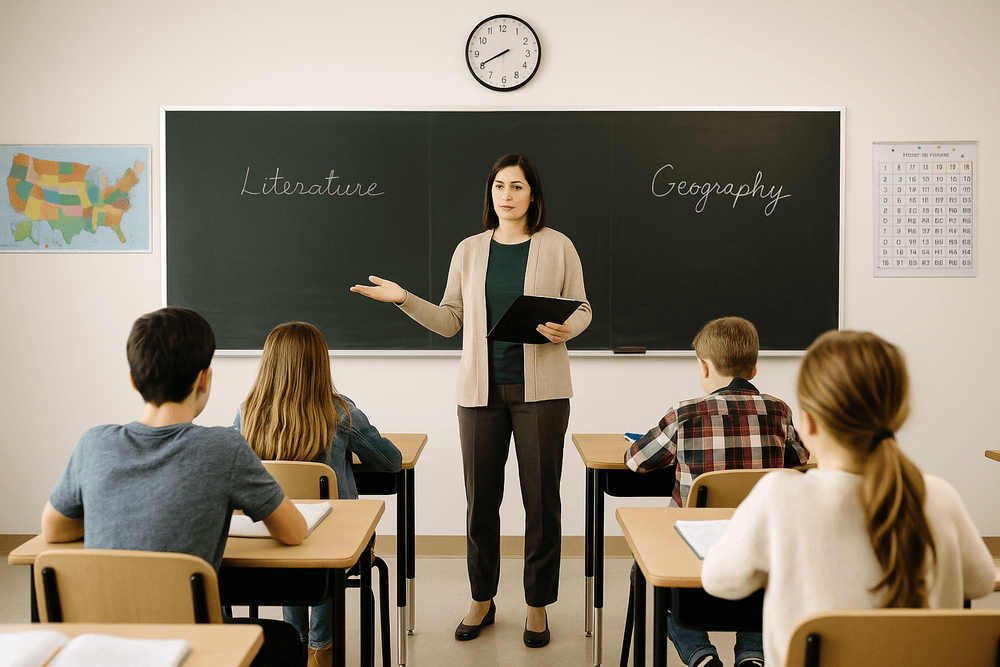
The debate over the best way to educate children is as old as education itself. Parents and educators continually seek methods that not only impart knowledge but also foster curiosity, independence, and a genuine love of learning. In this ongoing conversation, two prominent philosophies often stand at opposite ends of the spectrum: the traditional, teacher-led model and the child-centered Montessori method. While they may seem fundamentally different, a closer look reveals that both approaches have unique strengths and valuable lessons to offer. Understanding the core principles of each allows us to appreciate their distinct contributions and consider how blending their best elements could create a more powerful and holistic educational experience. This is not about choosing a winner, but about learning from both to build a better future for our students.
What is Traditional Education?
The traditional education model is what most of us recognize from our own school days. It is a teacher-centered system where the educator is the primary source of knowledge, delivering a standardized curriculum to a group of students who are typically the same age. The day is structured with predetermined subjects and timetables, and progress is primarily measured through grades, homework, and standardized tests.
Key Principles:
- Teacher-Led Instruction: The teacher directs the learning process, lecturing to the entire class.
- Standardized Curriculum: All students learn the same material at the same pace.
- Age-Based Grouping: Students are grouped in classrooms with peers of the same age.
- Extrinsic Motivation: Learning is often driven by external rewards, such as grades and praise.
The strength of this model lies in its efficiency and ability to deliver a consistent body of knowledge to a large number of students. It prepares them for structured environments and provides clear benchmarks for academic achievement.
What is the Montessori Method?
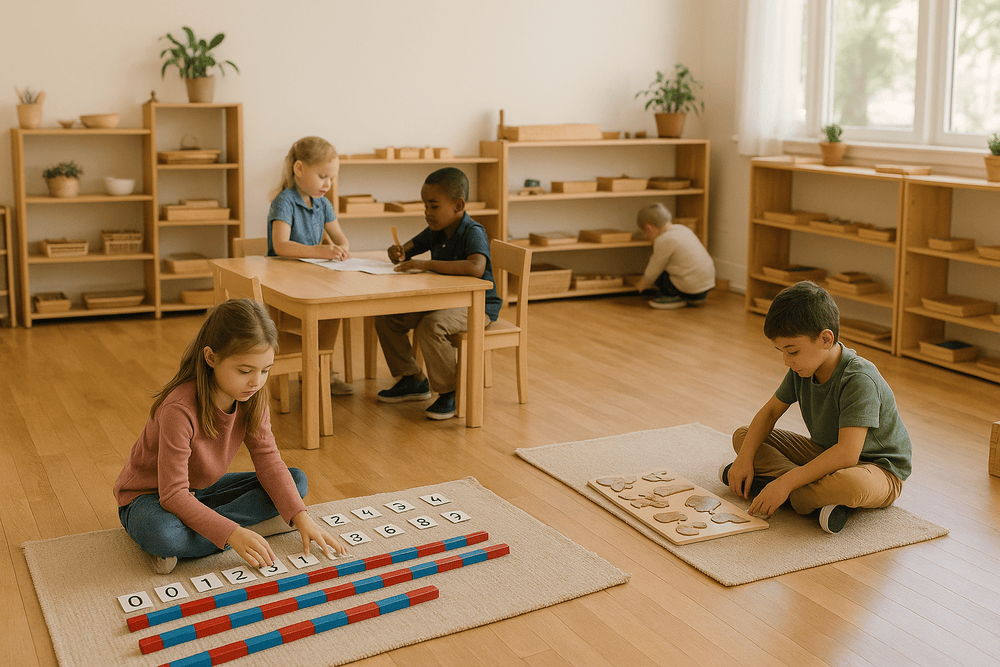
Developed by Dr. Maria Montessori in the early 20th century, the Montessori method is a child-centered approach. It is founded on the belief that children are naturally eager to learn and capable of initiating their own learning in a thoughtfully prepared environment. The teacher acts as a guide, observing each child and introducing them to materials and activities that match their developmental stage and interests.
Key Principles:
- Child-Centered Learning: Children choose their own activities, or "work," from a range of prepared options.
- Prepared Environment: The classroom is carefully organized with hands-on, self-correcting materials.
- Mixed-Age Groupings: Classrooms typically include children in a three-year age span, allowing for peer-to-peer learning.
- Intrinsic Motivation: The focus is on fostering an innate love of learning, driven by curiosity and a sense of accomplishment.
Montessori education excels at developing independence, self-discipline, and a deep, conceptual understanding of subjects. The mixed-age environment nurtures leadership skills in older children and provides support for younger ones.
Strengths and Limitations: A Balanced View
Neither system is perfect, and each has its own set of advantages and challenges. Traditional education provides a clear structure that can be beneficial for students who thrive on routine and explicit direction. Its standardized nature ensures that all students are exposed to a core set of foundational knowledge. However, its one-size-fits-all approach can leave behind students who learn at a different pace and may stifle the creativity of others. The Montessori method fosters incredible independence and critical thinking skills. It allows children to explore their passions and develop a profound sense of ownership over their education. On the other hand, the transition from a fluid Montessori environment to a highly structured traditional high school or university can be challenging for some students. The lack of formal grades can also be a point of concern for parents accustomed to traditional metrics of success.
The Best of Both Worlds: Creating a Hybrid Approach
The most compelling path forward may not be to choose one method over the other, but to integrate the best elements of both. Modern educators are increasingly recognizing the value of a blended approach that combines structure with flexibility. A traditional classroom could benefit from incorporating "Montessori moments," such as designated time for self-directed projects or the use of more hands-on, exploratory materials. This can help increase student engagement and cater to different learning styles without abandoning the core curriculum. Teachers can adopt the role of a facilitator more often, encouraging group collaboration and problem-solving. Similarly, Montessori schools can prepare students for future academic environments by introducing more structured, group-led projects in the upper grades. They can also find ways to provide parents with clearer feedback on academic progress that aligns with more conventional standards, without resorting to a purely grade-based system. Ultimately, the goal of any educational philosophy should be to equip children with the skills, knowledge, and mindset they need to thrive. The traditional model offers a valuable framework for structure and shared knowledge, while the Montessori method provides a powerful blueprint for fostering independence and intrinsic motivation.
By learning from both, we can move beyond a rigid "either/or" debate. We can build classrooms that are both structured and flexible, where teachers both guide and instruct, and where students learn not just what to think, but how to think. This integrated vision offers a powerful and inspiring path toward creating a more effective and engaging education for every child.
More Trending Articles


The Montessori Method vs. Traditional Education: What We Can Learn from Both
William Foster
2025-11-27