The Future of Education: How AI and VR Are Changing the Way We Learn
Lena Grant
2025-10-11
6 min read
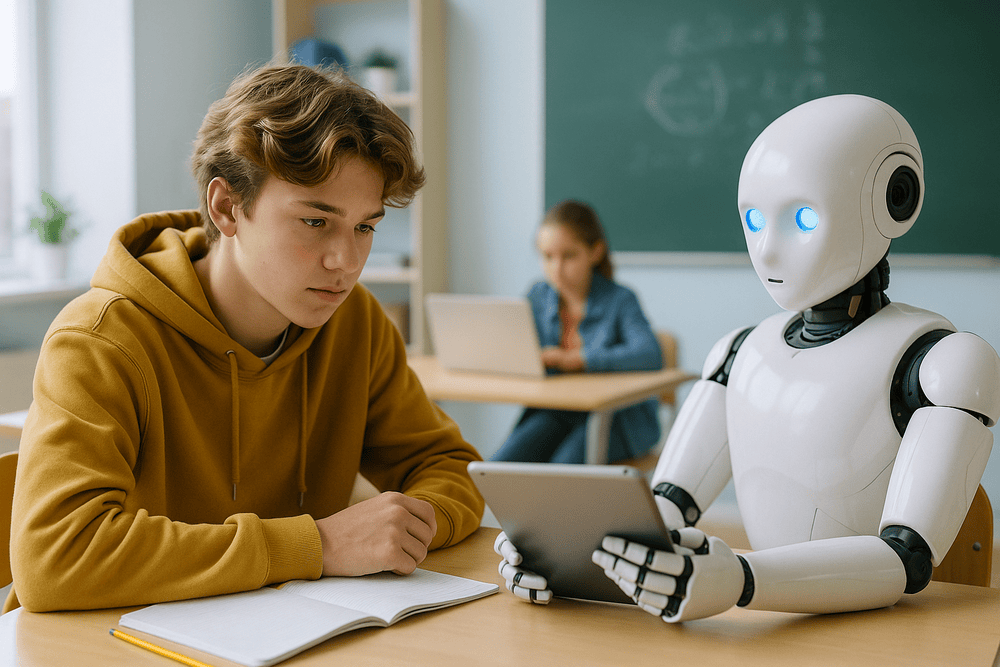
The traditional model of education, with its rows of desks and standardized curriculum, is on the verge of a monumental shift. Emerging technologies, once the stuff of science fiction, are now entering the classroom, promising to create more personalized, engaging, and accessible learning experiences than ever before. At the forefront of this revolution are artificial intelligence (AI) and virtual reality (VR), two powerful tools that are fundamentally changing the way we learn. This transformation goes beyond simply digitizing textbooks or using smartboards. It's about reimagining the very structure of education to meet the needs of every student. By harnessing the power of AI and VR, we can move away from a one-size-fits-all approach and cultivate an environment where curiosity, creativity, and critical thinking can flourish. Let's explore how these groundbreaking technologies are shaping the future of education.
Personalized Learning Paths with Artificial Intelligence
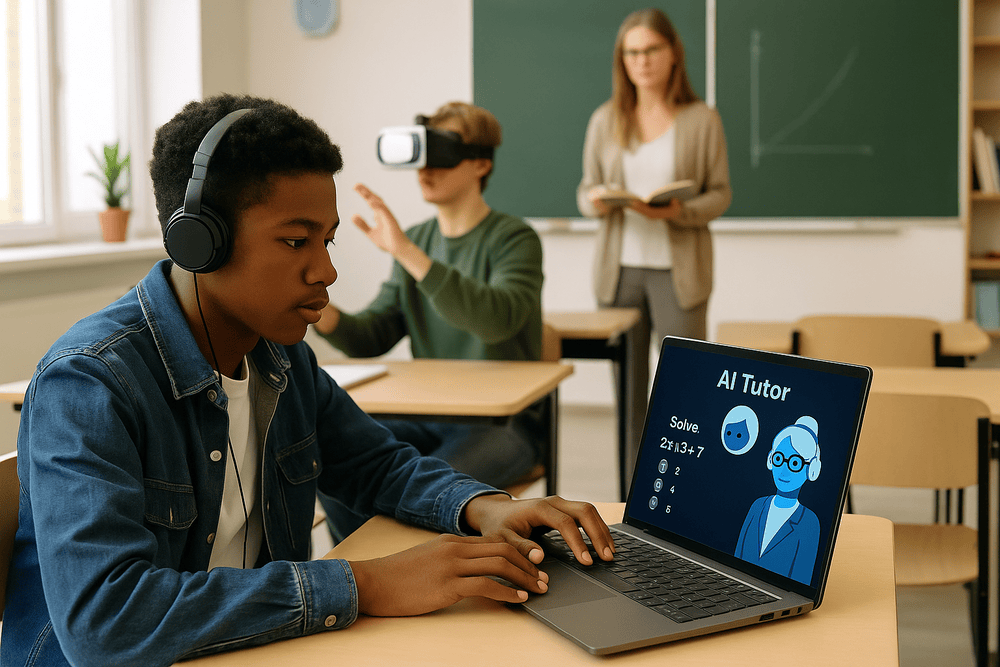
One of the biggest challenges in education has always been catering to the diverse learning speeds and styles of individual students. Artificial intelligence is poised to solve this problem by enabling truly personalized learning. AI-powered educational platforms can adapt in real time to a student's performance, offering extra support in areas where they struggle and providing more advanced challenges once they master a concept. Imagine an AI math tutor that can identify exactly why a student is having trouble with algebra. It can then generate unique practice problems, offer step-by-step video explanations, and adjust the difficulty level instantly. This kind of individualized support, available 24/7, was once only possible with a dedicated human tutor. Now, AI can help classroom teachers manage dozens of unique learning journeys at once, freeing them up to focus on more complex, collaborative, and creative aspects of teaching.
Immersive Experiences Through Virtual Reality
While AI personalizes the pace of learning, virtual reality transforms the content itself. VR has the incredible ability to transport students to places and experiences that would otherwise be impossible. Instead of just reading about ancient Rome, students can walk through a virtual reconstruction of the Colosseum. Instead of memorizing diagrams of a human heart, they can step inside it to see how it pumps blood. These immersive experiences make learning far more memorable and engaging. VR is particularly powerful for teaching complex, abstract concepts in STEM fields. Medical students can practice intricate surgical procedures in a risk-free virtual environment, and budding engineers can build and test virtual prototypes. By turning abstract ideas into tangible experiences, VR fosters a deeper and more intuitive understanding of the subject matter.
Breaking Down Barriers to Accessibility
Together, AI and VR have the potential to make education more accessible to students of all abilities and backgrounds. AI-driven tools can provide real-time translation and transcription services for students who are deaf or hard of hearing, as well as for English language learners. Text-to-speech and speech-to-text functionalities can assist students with dyslexia and other learning disabilities. VR can create inclusive learning environments for students with physical disabilities, allowing them to participate in virtual field trips and lab experiments they might not be able to access otherwise. It can also be used to create controlled social simulations to help students with autism spectrum disorder practice social skills in a safe and predictable setting. By leveling the playing field, these technologies ensure that every student has the opportunity to succeed.
Navigating the Challenges and Ethical Considerations
Of course, the integration of AI and VR into education is not without its challenges. The high cost of hardware and software can create a "digital divide," widening the gap between well-funded and under-resourced schools. There are also significant concerns about data privacy and security, as AI platforms collect vast amounts of information on student performance. It is crucial to establish strong ethical guidelines to ensure this data is used responsibly and to protect students' privacy. Furthermore, there is a risk of over-reliance on technology, which could diminish the development of essential interpersonal skills. The role of the teacher remains irreplaceable. Technology should be viewed as a powerful tool to augment, not replace, the human connection and mentorship that are at the heart of great teaching.
The future of education is a collaborative landscape where teachers, students, and technology work together. AI and VR are not just futuristic gadgets; they are tools that can empower educators and inspire a new generation of learners. They offer a path toward a more equitable, engaging, and effective educational system where every student's unique potential can be unlocked. By thoughtfully embracing these innovations while addressing their challenges, we can build classrooms that are not just places of instruction, but gateways to discovery. The journey has just begun, but the possibility of creating a world where learning knows no bounds is an inspiring vision worth striving for.